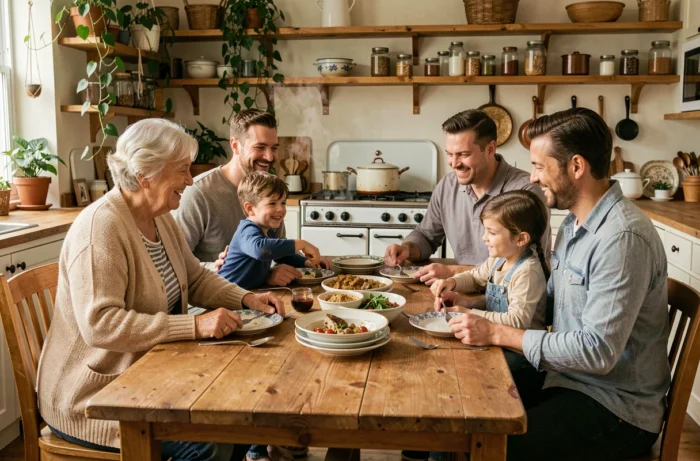
In France, family structures have become so diverse that the idea of a single household model is no longer relevant. Blended families, single-parent families, shared custody, grandparents involved in day-to-day life: creating a warm family environment means navigating relationships, routines and responsibilities that do not always align.
In 2019, France’s National Institute of Statistics and Economic Studies (Insee) reported that 800,000 stepparents lived with their partner’s children, without automatically having parental authority. This gap between an emotional role and legal status reflects a broader reality: a sense of belonging cannot be imposed; it is built through practical gestures and thoughtful arrangements.
Blended families and a sense of belonging: what happens across multiple households
When a child moves between two homes, two routines and sometimes two different sets of siblings, their place in the family is not established simply by decorating a bedroom. It depends on how each adult acknowledges the relationships the child has elsewhere, without downplaying them or treating them as competition.
A stepparent who cooks a child’s favourite meal, even when the child is not staying with them that week, is making an inclusive gesture. A biological parent who naturally mentions the other household in everyday conversation helps the child avoid compartmentalising their emotional life. Repeated over time, these small decisions create an environment where the child does not have to choose sides.
The challenge is that practical roles and legal responsibilities do not always align. A stepparent may provide care, prepare meals and help with homework, yet have no say in medical or educational decisions. Acknowledging this reality within the household, including in front of the children, can ease some of the tension. Pretending everyone has the same status has the opposite effect: everyone senses the mismatch but cannot put it into words.
Online resources explore how family bonds are built from different perspectives. For example, https://tout-mon-monde.fr offers guidance for navigating family life day to day.
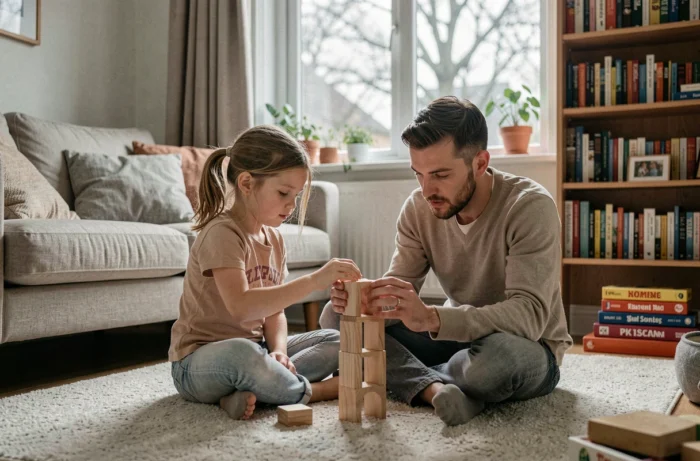
Mental load and household organisation: making invisible work visible
A warm home depends on more than the quality of the time spent together. It also depends on how everyday work is shared. The Drees 2024 Opinion Barometer, cited by Insee, highlights a striking gap in perceptions: 59% of women say they carry most of the mental load, compared with 9% of men.
This imbalance directly affects the atmosphere at home. The person who handles all the logistics—medical appointments, shopping, holiday planning and school matters—can end up acting as a household manager rather than taking a full part in family life. Other household members, meanwhile, may feel that everything simply runs smoothly, reinforcing the misunderstanding.
Identify tasks before dividing them up
Sharing responsibilities does not start with an Excel spreadsheet on the fridge. It starts with an honest inventory of what gets done, by whom and how often. Some tasks are visible, such as cooking and cleaning; others are much less so, such as anticipating needs, remembering dates and planning seasonal clothing.
- For one week, list every small decision made by each adult in the household, including seemingly minor ones (checking the laundry detergent supply, reminding someone about an appointment)
- Separate hands-on tasks (doing the shopping) from planning and oversight (deciding on the menu, checking what is running low, making plans)
- Rotate planning and oversight tasks instead of habitually assigning them to the same person
This process of clarification does not guarantee a perfect balance, but it makes imbalances easier to discuss. In a household where the load is acknowledged, it can be negotiated.
Family rituals and everyone’s place: beyond Sunday lunch
Family rituals help build a sense of belonging, but they work only if every member can contribute according to their abilities and preferences, rather than being assigned a default role.
A four-year-old who lays out the napkins takes part in the mealtime ritual just as much as a teenager who chooses the dinner playlist. A grandparent who calls at the same time every Wednesday creates a regular point in the week that a child can count on, even from a distance.
What makes a ritual last
A lasting family ritual is not the most ambitious one. It is the one that survives busy weeks, illness and unexpected events. Three criteria can help distinguish a sustainable ritual from a good intention that is likely to fade:
- It does not depend on just one person to happen (if the mother is away, the ritual still takes place)
- It is short or flexible enough to fit around other commitments (a 20-minute meal is better than a brunch cancelled three times)
- It gives participants some choice (everyone brings something, suggests a topic or chooses an activity)
A ritual that unintentionally excludes a household member—because it falls on the other parent’s custody day or assumes a skill the child does not have—has the opposite effect to the one intended. Regularly checking that the ritual really includes everyone helps avoid this pitfall.
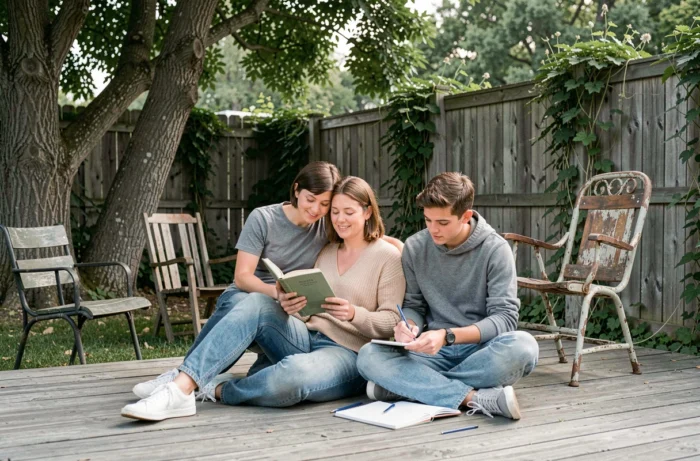
Physical spaces and family life: what your home’s layout says about your priorities
The way a home is arranged often reflects a hierarchy of needs, even when we are not aware of it. A living room reserved entirely for adults, a child’s bedroom without a quiet reading corner, a locked office: every design choice sends a message about the place each person is given.
In blended families, questions of space can be even more sensitive. A child in a shared-custody arrangement who returns each week to a sofa bed in the living room receives a different message from one who has a drawer, a shelf or a designated corner of their own, however modest.
The issue is not how much space is available, but whether familiar reference points are consistently there. A hook on the wall for their coat, a box for their belongings, a regular place at the table: these small, tangible details express an intention to include that words alone cannot convey.
Creating a warm family environment where everyone has a place is less about pursuing an abstract ideal than making everyday choices. Acknowledging imbalances, adapting rituals to everyone’s circumstances and treating space as a form of communication will not eliminate tension, but they can help every household member feel welcome rather than merely tolerated.