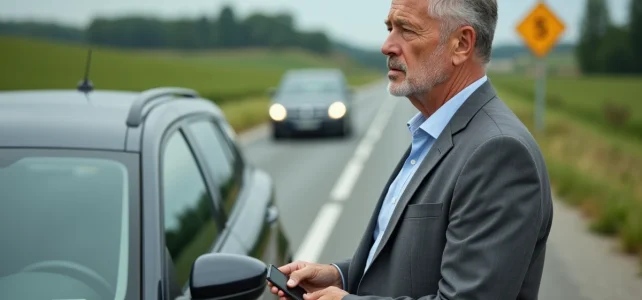
A cold, undeniable figure: every year, thousands of drivers find their license threatened without ever having crossed the gaze of an officer on the roadside. The twin radar, discreet and fearfully precise, reshuffles the cards of road control. From a distance, it captures, it flashes, but it does not stop. The driver, on the other hand, discovers the infraction by mail, sometimes several weeks after the event.
Twin Radar: Understanding an Increasingly Common Control Tool
The twin radar has now become part of the scenery, in Paris as well as on secondary roads. This laser device operated by law enforcement works just as well on highways as in front of a school or at the exit of a roundabout. Here, there is no flash and no trace at the moment. The principle? A laser beam measures in real-time the speed of a vehicle, sometimes from nearly a kilometer away. Prolaser 4, TruSpeed SE, Eurolaser: technology is gaining ground, and the margins of error remain low.
The advantage of the twin radar is also its mobility. Handheld or mounted on a tripod, it blends into the environment. The motorist has no tangible alert. The officer spots, notes the speeding, observes the use of a phone or the absence of a seatbelt… without ever stopping the car. The result: the infraction is recorded from a distance, the ticket is sent by mail, addressed to the holder of the registration certificate.
To learn everything about the mechanics of this method and its administrative repercussions, the details are available here: twin radar without police arrest. A procedural point to know when the fluidity of traffic masks the most formidable control of the moment.
This tool leaves little room for improvisation: the recognized precision, discretion, and the ability to control from a distance disrupt the way everyone must manage their behavior behind the wheel. The question remains: how to prove who was really driving when the sanction arrives, without direct confrontation?
What Real Risks for Your License in Case of Control Without Arrest?
With the twin radar without arrest, live control disappears. No arrest. The holder of the registration certificate receives the ticket themselves, sometimes days after the infraction, without certainty of having been at the wheel. The troubles begin: how exposed is the driver’s license?
The ticket details the nature of the offense: speeding, phone in hand, seatbelt forgotten. For each violation, standard fines and point withdrawals are provided. This table summarizes the official responses:
| Offense | Fine | Point Withdrawal |
|---|---|---|
| Speeding < 20 km/h | 68 € | 1 |
| Speeding 20-30 km/h | 135 € | 2 |
| Speeding 30-40 km/h | 135 € | 3 |
| Speeding 40-50 km/h | 135 € | 4 |
| Speeding > 50 km/h | up to 1,500 € | 6 |
| Not wearing a seatbelt / Phone while driving | 135 € | 3 |
The twin radar does not photograph anyone. If the owner is not the concerned motorist, it is up to them to designate the driver via the form attached to the ticket. Companies are required to do so: a failure to do so leads to an additional fine. Only the person identified as the driver will suffer the loss of points, but the fine must always be paid.
The time frame for receiving the ticket varies: generally between 15 and 30 days. Then, a 45-day countdown begins to contest or designate the true driver. If nothing is done, the points disappear from the holder’s license. With multiple infractions, the accumulation can sooner or later lead to suspension, or even outright cancellation of the license.
Traps and Subtleties of the New Regulations to Absolutely Know
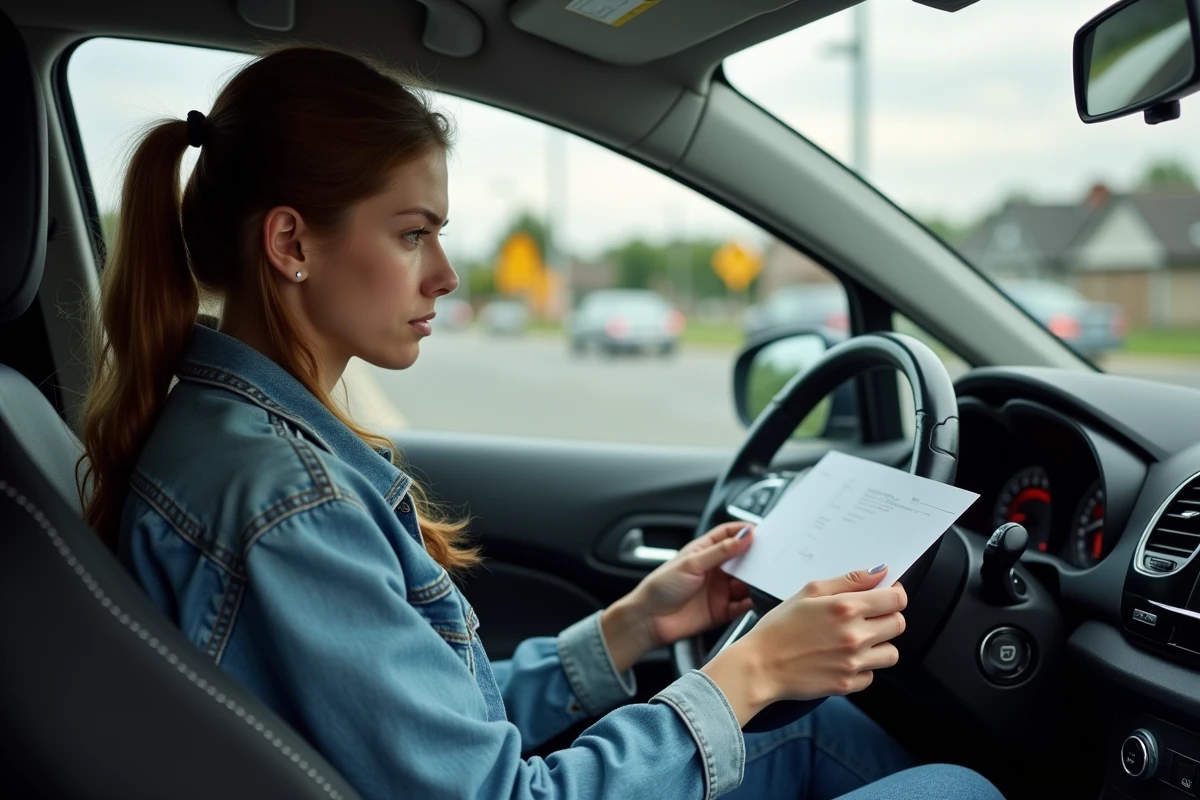
The rules stemming from the twin radar without arrest contain many details that escape first reading. When the ticket arrives, the payment belongs to the owner, while the loss of points will be applied to the person identified as the driver. This distinction is still overlooked by many motorists.
If you were not driving at the time of the infraction, it is imperative to designate the true driver before the deadline. Otherwise, beyond paying the fine, the sanction on your license will fall. Companies face an additional penalty if they do not provide the identity of the concerned employee.
Contesting a ticket is also a race against time: 45 days, no more. You need to gather the necessary evidence, prepare your file; in some complex cases, consulting a traffic law attorney can help defend your rights, rectify a double sanction, or correct an error regarding the person.
Here are some reflexes to limit unpleasant surprises:
- A ruling from the Court of Cassation reminded that the burden of proof lies with the motorist in case of contestation.
- Be sure to check the margin of error noted during the control: sometimes, a few km/h make the difference between a reprimand and a sanction.
- Apps like Coyote often locate twin radars, but respecting speed limits is safer than relying on technology.
With these developments, road control is changing its face: less visible, more relentless. In the future, every driver will have to learn to cope with a laser eye, silent but omnipresent. And when the letter arrives, the certainty of one’s place at the wheel is sometimes worth more than just a simple acceleration.