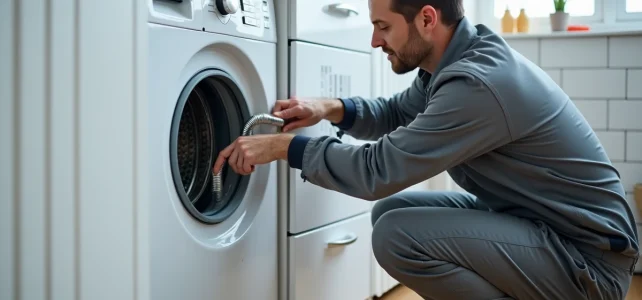
Connecting a washing machine and a dryer to the same drainage outlet seems logical when space is limited. The double drainage relies on a simple principle: a Y-connector or a two-inlet siphon collects the wastewater from both appliances into a single pipe. However, this setup, often presented as universal, raises questions about sizing, flow rate, and compatibility that most installation guides do not detail.
Backflow and hydraulic overload: the limits of a single connection
The most common problem with double drainage is not just leaks. When a washing machine drains at the same time as a condensation dryer releases its water, the combined flow can exceed the capacity of the drainage pipe. The result: dirty water backs up into the appliance that is not draining.
This phenomenon worsens if the diameter of the main pipe is too small or if the slope of the drainage does not allow for both flows to be absorbed simultaneously. A washing machine with a powerful drain pump generates a flow rate much higher than that of a heat pump dryer, whose condensate drainage remains modest.
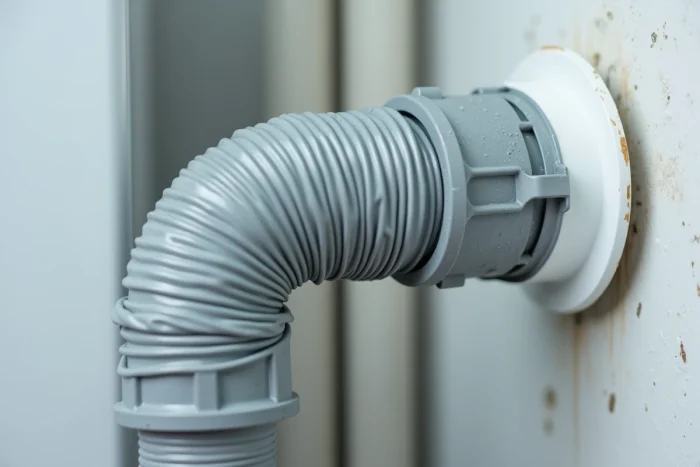
To fully understand the operation of the double drainage for washing machines and dryers, it is essential to distinguish between two very different situations: connecting two independent appliances to the same siphon, or managing the drainage of a combined washing-drying appliance that already has a dedicated internal circuit.
Double drainage: comparison of possible configurations
Not all installations are equal. The choice of connection depends on the type of dryer, the flow rate of the washing machine, and the layout of the space.
| Configuration | Principle | Risk of backflow | Suitable for high flow rates |
|---|---|---|---|
| Double inlet siphon (Y) | Two drainage pipes connected to a single siphon | Moderate to high | No |
| Two separate siphons on the same pipe | Each appliance has its own siphon, downstream connection | Low | Yes, if the downstream diameter is sufficient |
| Two completely independent drainages | Each appliance connects to a distinct drainage point | Almost none | Yes |
| Dryer with condensation tank (no drainage) | Only the washing machine uses the drainage | None | Not applicable |
The double inlet siphon remains the most common solution in existing homes, but it also presents the most constraints. On the other hand, two separate siphons connected downstream offer better flow management, provided that the main pipe has an adequate diameter.
Compact kitchen, rental, or high-flow machine: when to avoid double drainage
Double drainage is not always the right answer. Several situations justify steering clear of it.
- In a compact kitchen, limited access to the drainage network and the small space behind the appliances complicate the connection. If the slope of the drainage pipe does not meet the minimum requirement, water stagnates and clogs multiply.
- In rentals, modifying the existing plumbing is not always permitted. Connecting a condensation dryer to a siphon designed for a single appliance can cause odor backflows or leaks that the tenant will have to deal with.
- With a high-flow washing machine, the flow can saturate a Y-connector intended for a single appliance. Backflow then affects the dryer, whose condensate pipe is not designed to withstand reverse pressure.
In these three cases, two separate drainages better protect the appliances than a shared connection. If a second independent drainage is not feasible, the most reliable solution remains to keep the condensation tank of the dryer and not connect it at all to the network.
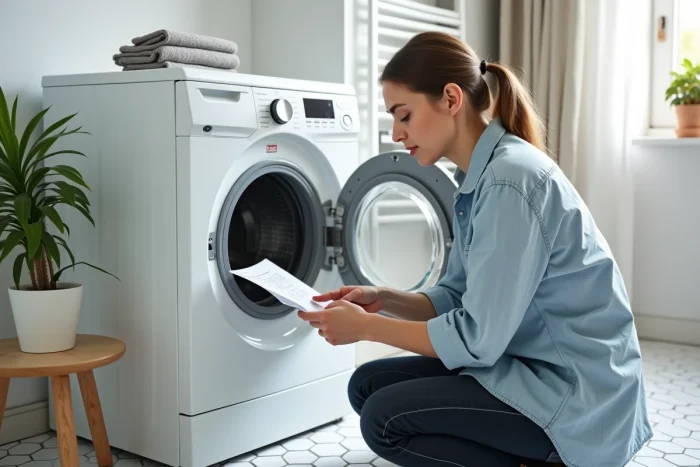
Siphon, diameter, and slope: the technical parameters of a reliable connection
A functioning double connection relies on three often-overlooked parameters.
The siphon must be sized to absorb two flows. A standard siphon with a single inlet, even with a Y-adapter added, is insufficient if both appliances drain simultaneously. A dedicated two-inlet siphon with a backflow preventer limits the risk of backflow between the two circuits.
The diameter of the main drainage pipe plays a direct role. A pipe that is too narrow creates a bottleneck when both appliances operate simultaneously. The connection pipe for each appliance also has its own diameter, usually smaller than the main pipe, which necessitates checking the compatibility of the fittings.
The slope of the drainage determines the speed at which water exits the system. Without sufficient slope, water from the washing machine will flow back into the dryer or stagnate in the siphon, promoting bad odors and detergent buildup.
Checks before connecting two appliances
- Ensure that the siphon has two separate inlets and a functional backflow preventer
- Check that the diameter of the downstream pipe can handle the combined flow of both appliances
- Ensure that the slope of the drainage pipe is consistent and directed towards the drainage point
- Test the tightness of each connection before putting the appliances back into operation
A well-executed double connection generates neither backflow, nor odor, nor gurgling noise in the pipes. If any of these symptoms appear after installation, the problem almost always stems from the sizing of the siphon or the drainage diameter, not from the appliances themselves.
Double drainage remains a relevant solution when technical conditions allow it. In other cases, it is better to have two separate circuits or a dryer with a condensation tank than a shared setup that will eventually backflow.