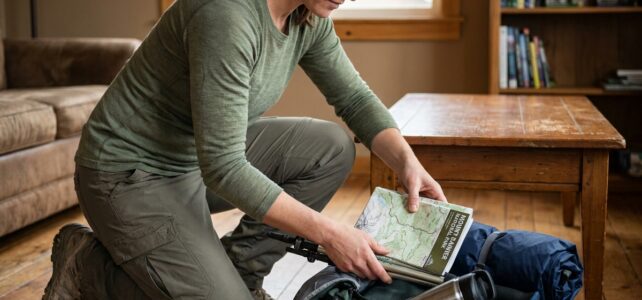
Giving a gift to a regular hiker presents a paradox: the person already has the basic gear, and every extra gram in the pack must be justified. Choosing a relevant hiking gift depends less on the budget than on understanding the person’s style of practice, whether it’s day hikes, multi-day treks, or self-sufficient camping.
Hiking gift suited to the style of practice: the criterion that lists overlook
Most gift guides for hikers categorize ideas by budget. This approach misses the determining factor: a useful gift corresponds to the type of hiking practiced. A portable water filter, often recommended, is of no interest to someone doing four-hour loops in a state forest with a potable water source at the start.
Conversely, a magnetic clip for a hydration bladder, an accessory that weighs just a few grams, is a great help to a trail runner or a long-distance hiker. A compact insulated mug appeals to the mid-mountain hiker who enjoys a coffee break at the summit, but it becomes a burden for someone trying to reduce every gram for a self-sufficient GR.
Before checking the best gifts for hiking enthusiasts, the first question to ask is: how many consecutive days does this person hike, at what altitude, and do they carry their camping gear on their back?
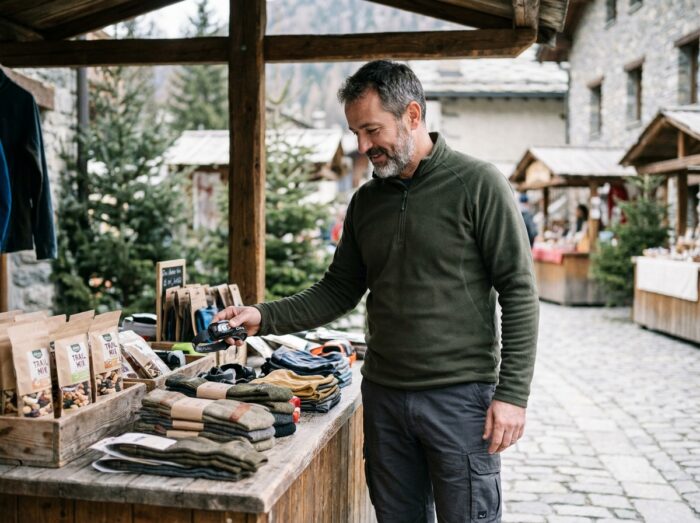
Lightweight accessories with high utility value on the trail
Field feedback converges on one point: the most appreciated gifts by experienced hikers are not the most expensive, but those that solve a specific annoyance. Small accessories with high utility value form a distinct category, often overlooked in favor of heavy equipment.
- The waterproof pouch (like a roll-top bag) protects the phone, ID papers, and the IGN map without adding noticeable weight. It replaces the makeshift plastic bag that many still use.
- The mosquito-repellent bracelet or the insect head net becomes a concrete ally in humid areas or at low altitudes in summer, where conventional repellents evaporate quickly during exertion.
- The nature journal or hiking notebook, pocket-sized with a hard cover, allows for noting observations of wildlife, flora, or simply the stages of the hike. It’s a gift that doesn’t expire and doesn’t duplicate an app.
These items have one thing in common: they don’t end up at the bottom of the bag because they weigh little and are useful on every outing. Their modest cost also makes them easy to give without risk.
What ends up forgotten in a drawer
Some popular gifts on online lists pose practical problems. Personalized hiking poles, for example, are an appealing gift on paper. In reality, the choice of poles depends on the hiker’s height, weight, preferred grip type, and locking system. Giving poles without knowing these parameters is like giving shoes without knowing the size.
The foldable solar panel suffers from the same mismatch. Its weight and bulk are only justified for multi-day treks without access to an electrical outlet, which concerns a minority of practitioners.
Experience gifts for hikers: an alternative to gear
A clear trend in recent content is to favor “experience” gifts over additional equipment. For a hiker who already has their gear, receiving one more item can create polite embarrassment.
Several concrete options stand out:
- A sports massage or a session with a sports podiatrist. After a season of intensive hiking, this is a gift that meets a real need, rarely self-funded.
- A subscription to a specialized magazine (hiking, mountain, nature). The paper format remains appreciated in this community, and the subscription lasts several months.
- A gift card at an outdoor store. This option lacks poetry, but it allows the person to choose exactly the piece of equipment they desire. An outdoor gift voucher avoids the trap of an unnecessary gift.
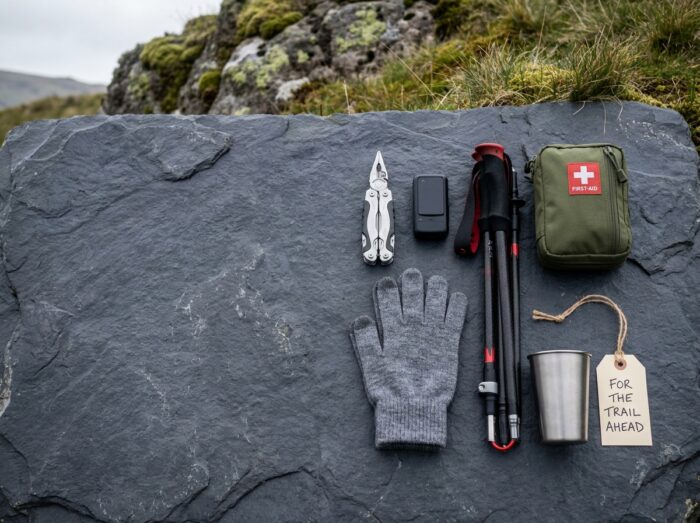
Checklist before buying a hiking gift
Rather than an additional list of products, a simple filter can help assess the relevance of a gift for a hiker.
| Criterion | Question to ask |
|---|---|
| Weight | Does the item weigh light enough to be taken regularly? |
| Versatility | Is it useful for several types of outings (day, camping, trail)? |
| Duplicate | Does the person already have an equivalent, even if handmade? |
| Personalization | Does the choice depend on specific measurements or technical preferences? |
If the item is heavy, only useful in a specific context, duplicates something, or requires trying on, the risk of it remaining unused is high. In this case, the experience gift or gift card remains the safest options.
An experienced hiker judges a gift by its ability to solve a concrete problem on the trail. Lightweight accessories, physical recovery experiences, and specialized subscriptions tick this box more often than blindly chosen technical equipment.